Posts

Five TV Restaurants in Which I Want to Eat in Real Life

Image
In case you missed it, there’s a real-life pop-up restaurant modeled after “The Max” — the fictional restaurant featured in 90s sitcom   Saved by the Bell.   What a cool idea, and a great example of a concept playing on both of the   most powerful forces in marketing .  Taking inspiration from   Saved by the Max , I brainstormed five TV restaurants in which I’d pay to dine in real life:   1. Monk’s Diner —  Seinfeld   The outside of Monk’s Diner from Seinfeld is real-life   Tom’s Restaurant   in New York. However, the inside of the restaurant was shot on a sound stage. While   Hulu built a real-life version of Jerry Seinfeld’s apartment   to promote its deal with the show, nobody has built a replica of the inside of Monk’s Diner. I’d do just about anything for a chance to talk about nothing while eating chicken salad, on rye, untoasted, and drinking a cup of tea.   2. Café Nervosa —  Frasier ...

The Two Most Powerful Forces in Marketing

Image
Newness and nostalgia.   Could there be more powerful forces in marketing?* And yet they’re polar opposites.   One says, “I’m undefined, different, and exciting. Check me out.”   The other says, “Remember how great I used to make you feel?”   Both are incredibly powerful. It’s quite the accomplishment to go from new to nostalgic. That doesn’t happen by accident. It takes years and years of excellence to get there.   The best brands consistently use both newness and nostalgia to excel. It may seem like an oxymoron, but I think of these forces every time I hear, “the all new Chevrolet” or “new at Disney World.”   It’s a slippery slope, though. Nobody asks, “what’s new at Marshall Fields?” any more.   For established brands, successfully tapping into newness and nostalgia is perhaps our biggest challenge and opportunity as marketers. How will you take advantage of both?   There’s never a lack of ideas.   *”...

Loyalty Program? You Don’t Need No Stinking Loyalty Program

Image
Loyalty is a hot topic in many industries, especially the restaurant industry. Starbucks recently overhauled its loyalty program. McDonald's is reportedly about to roll one out. But if your company is considering launching a loyalty program, allow me to make the case that your time and effort are almost certainly better spent elsewhere. What Is a Loyalty Program? I'm defining "loyalty program" as a program that rewards customers with freebies for making purchases at a business. 20 years ago, this was often handled with a punch card: "Buy nine scoops of ice cream and get the tenth one free." Today, this is very often handled digitally.   The rise of digital loyalty programs has muddled the definition of a loyalty program. Free rewards are often mixed with other features like online ordering or mobile payment. If you take away only one thing from this post, let it be this: When it comes to "digital loyalty programs," do not confuse the bene...

#Super Bowl #Hashtags 2016

Image
In what has become an annual tradition here at the Never a Lack of Ideas blog, I monitored all of the Super Bowl commercials and kept track of all of their hashtags. For the first time, I noticed a sharp decline in the number of ads that had hashtags tied to them. And, Super Bowl advertisers have obviously been reading my blog because we saw far fewer random hashtags this year than in any year past. After all, the best hashtag (if you really must have one), includes your brand name. Take this year’s quiz — it’s just 10 hashtags — and leave your score in the comments below. Good luck!   Add This To Your To-Do List Take last year’s quiz and bring back fond memories of hashtags you couldn’t even remember immediately after last year’s game. I've posted t he answers to this year's quiz in the comments below. There’s never a lack of ideas.

Friendly Reminder: Consumers Aren’t Rational

Image
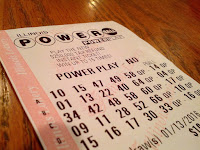
Well, it's over. Powerball madness has ended. Three winning tickets will split the $1.6 billion and we can all go back to our daily lives. This was a good reminder, though, that people aren't rational. If we were, we wouldn't buy Powerball tickets. With the odds of winning at 1 in 292 million, even with 100 tickets, your chances are still basically zero. As I was irrationally standing in line to buy my Powerball ticket, the cashier told me that earlier someone had bought 500 tickets (for $1,000) after selling his car and using all the money to buy lottery tickets. We now know that he didn't win the jackpot or $1 million. If that's not irrational, I don't know what is. Life can get back to normal now. Until we get swept up with the next irrational thing. I can't wait. There's never a lack of ideas. PS. My Powerball ticket is pictured here. We won $4! By spending $10....

Four Rules for Winning in the Convenience Economy

Image
There are several names for the shifts we're seeing in many industries today: some call it the rise of the Sharing Economy. They point to businesses like AirBNB and Uber as pioneers. The Harvard Business Review calls it the rise of the Access Economy and points to Zipcar as a trailblazer. I call it the rise of the "Convenience Economy" and I've included three examples below. Here's my definition of the Convenience Economy: Businesses winning in the convenience economy are adding convenience by eliminating friction in the buying process. Four Rules I see four rules for winning in the convenience economy. The most important one is the last: Convenience is more important than price. Customers have thus far demonstrated they are willing to pay extra for convenience. The cost of convenience hasn't been driven to zero... yet. Unlike many other industries in which costs have been driven to zero (free email providers, free news via websites, free shipping,...

To Whose Wagon Will You Hitch Your Star?

I've heard my fair share of sales pitches over the last nine months. I've explained our marketing strategy to reps from all types of companies. I've weighed the pros and cons of their proposed solutions. And I've selected the best ones. In making those decisions, it always came down to one question: to whose wagon will I hitch my star? In other words: On what solution do I have enough faith to stake my reputation and my company's reputation? If you're a marketing solutions provider, I hope you're trying to answer that last question. There's never a lack of ideas.