Posts

The Super Bowl of Marketing Isn’t this Weekend, It’s in a Year

Image
When it comes to Super Bowl ads, I’m like a kid on Christmas morning — I look forward to them every year. I’ve blogged about them five years in a row . But the real Super Bowl of Marketing isn’t until 2020, and I’m even more excited about it than the Big Game. The US Census is the single most important event in the field of Marketing, but it only happens every ten years. Luckily for us, it happens again in 2020. History The Census is required by Article I, Section 2 of the Constitution. The data collected determine the number of seats each state has in the U.S. House of Representatives. For Marketers, the Census is our chance to look at demographic trends without needing to use a sample of data. In other words, census data are the single source of truth — no sample set required! As Secretary of State in 1790, Thomas Jefferson oversaw the first Census. James Madison wrote five of the six questions it asked. That’s when the population of the US hadn’t reached 4 million people ye...

2018 Super Bowl Ads: Match the Celebrity Endorsers

Image
Five years ago, in an attempt to demonstrate the ridiculousness of including hashtags in Super Bowl commercials, I started creating annual quizzes to test which hasthags were memorable. Not many were. Because most hashtags are silly.  The only acceptable hashtags in advertising are a brand’s name. Five years later, advertisers have gotten the message. I only counted eight total hashtags shown in Super Bowl ads this year. I couldn’t even make a good quiz. This year, it seemed like more ads included well-known celebrities than in previous years. So here’s an all-new quiz for you: Can you match the celebrity with the endorsed brand from its 2018 Super Bowl commercial?   Add This To Your To-Do List Take the quiz! Add your score to the comments, below. There’s never a lack of ideas. Photo courtesy of Gage Skidmore via WikiCommons.

Ten Steps to Take When Your Brand is the Victim of Fake News

Image
Fake news can strike any brand at any time. It hit ours recently. Consider this a playbook for what to do when fake news hits your brand.  For clarity, I’m not talking about how to respond to a story in which facts were misinterpreted or taken out of context. I’m not talking about editorials, either. I’m talking about a completely fabricated story that has no basis in fact and is damaging to your brand. When fake news hits, it will almost certainly spread via Facebook first. Follow the steps below and you’ll make it through as unscathed as possible. Make sure the fake news story is actually fake. Don’t proceed with the next steps unless it’s truly fake news and has no basis in fact. Draft a brief statement (3-4 sentences) to communicate four things: You are aware of the fake news story  It’s truly fake news You are working to take down the story You are contacting each person who has shared the story online and asking them to remove their post Communicate to ...

On the Fence: The First Priority of Marketing Communication

Image
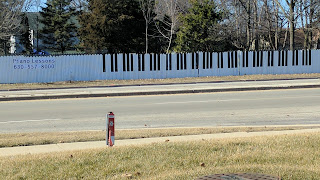
Four years ago, I wrote the definitive list of marketing communication priorities. First on that list:   Utilize your physical location (if you have one).   The piano teacher who owns the fence pictured here is doing this perfectly. Well done.   There’s never a lack of ideas.

#SuperBowl #Hashtags 2017

Image
For the fourth year in a row, I tracked all ads shown during the Big Game and kept track if an ad showed a hashtag. I do this as a way to convince marketers to stop using silly hashtags — and I think it’s working. Only 25% of ads contained a hashtag this year — the lowest percentage I’ve seen in the last four years. You're welcome, America. Remember: the best hashtag to use (if you must use one) is simply a brand name. Let’s see if you can identify these 7 hashtags from Super Bowl LI: Take the quiz now . And leave your score in the comments, below.  Take the quiz

Five TV Restaurants in Which I Want to Eat in Real Life

Image
In case you missed it, there’s a real-life pop-up restaurant modeled after “The Max” — the fictional restaurant featured in 90s sitcom   Saved by the Bell.   What a cool idea, and a great example of a concept playing on both of the   most powerful forces in marketing .  Taking inspiration from   Saved by the Max , I brainstormed five TV restaurants in which I’d pay to dine in real life:   1. Monk’s Diner —  Seinfeld   The outside of Monk’s Diner from Seinfeld is real-life   Tom’s Restaurant   in New York. However, the inside of the restaurant was shot on a sound stage. While   Hulu built a real-life version of Jerry Seinfeld’s apartment   to promote its deal with the show, nobody has built a replica of the inside of Monk’s Diner. I’d do just about anything for a chance to talk about nothing while eating chicken salad, on rye, untoasted, and drinking a cup of tea.   2. Café Nervosa —  Frasier ...

The Two Most Powerful Forces in Marketing

Image
Newness and nostalgia.   Could there be more powerful forces in marketing?* And yet they’re polar opposites.   One says, “I’m undefined, different, and exciting. Check me out.”   The other says, “Remember how great I used to make you feel?”   Both are incredibly powerful. It’s quite the accomplishment to go from new to nostalgic. That doesn’t happen by accident. It takes years and years of excellence to get there.   The best brands consistently use both newness and nostalgia to excel. It may seem like an oxymoron, but I think of these forces every time I hear, “the all new Chevrolet” or “new at Disney World.”   It’s a slippery slope, though. Nobody asks, “what’s new at Marshall Fields?” any more.   For established brands, successfully tapping into newness and nostalgia is perhaps our biggest challenge and opportunity as marketers. How will you take advantage of both?   There’s never a lack of ideas.   *”...